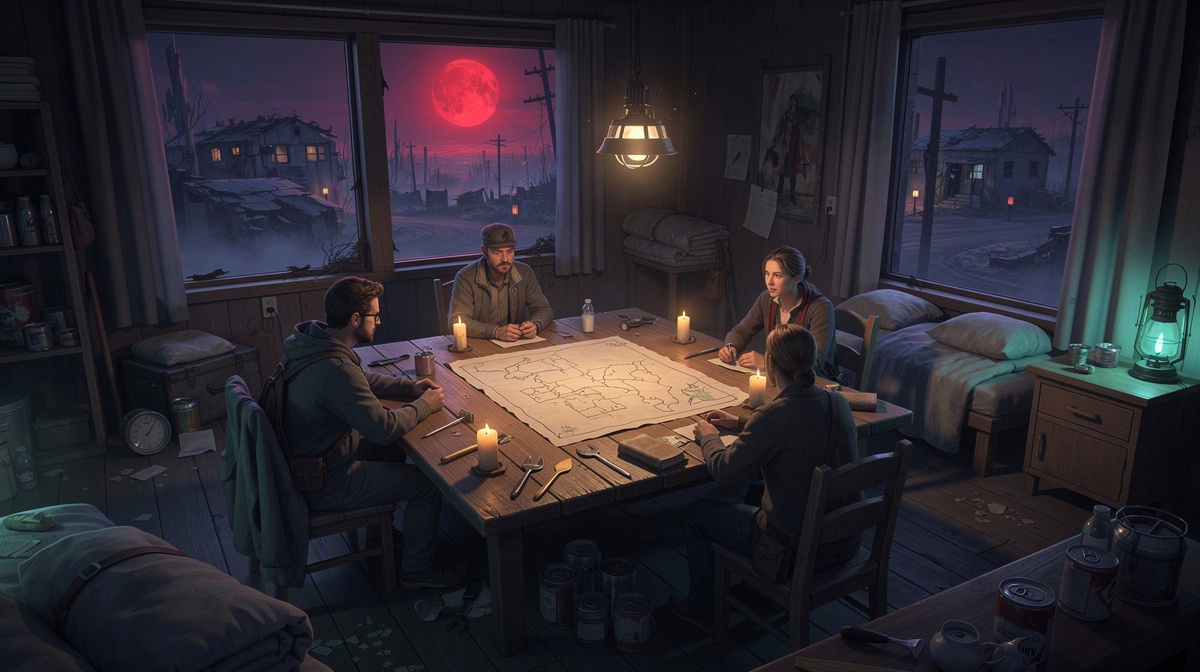
If you searched for blood moon settings in 7 Days to Die, you probably want one thing: horde nights that fit your friend group instead of wrecking the pace of your sessions. This guide stays focused on that choice for private co-op play.
For the server side, see how to host a 7 Days to Die server, the 7 Days to Die page, or the full per-minute price list.
With EphemeralHost, your group can:
- create a server in the browser
- pick the slots
- start it in the panel or with
/startin Discord - share the address shown in the panel
When nobody is online, it pauses by itself and the world stays saved. 7 Days to Die is available from 0.25 €/h.
What blood moon settings change for your group
In 7 Days to Die, blood moon settings decide more than how scary one night feels. For a group of friends, they set the rhythm of the whole world. The question is not just “Can we survive?” but also “What kind of co-op nights do we want?”
These settings usually shape four things:
- how often the event comes up
- how predictable it feels
- how much prep your group needs
- how punishing a bad night becomes
That matters because every friend group plays differently. Some groups like long stretches of looting, building, and talking, with horde night as an occasional spike in tension. Others want blood moon nights to drive the whole campaign, with defense plans and resource runs built around them.
The same choice can feel very different depending on who is in the server. A setting that feels exciting to confident players can feel draining to newer friends. A setup that seems easy to one group may feel perfect to another if they mainly want co-op progression and a reason to defend their base now and then.
Blood moon settings also affect group roles. Tougher nights usually push friends to specialize more: one person gathers, one builds, one handles ammo, one fixes damage, and so on. Softer settings leave more room for everyone to learn a bit of everything without the night falling apart from one mistake.
A useful way to judge your setup is to look at what happens between blood moons. If your group spends most sessions recovering, the pressure may be too high. If nobody talks about the next horde night at all, you may want a little more threat.
Good settings are the ones that keep your friends wanting one more session together.
How to choose settings by group type
A useful way to pick blood moon settings is to stop looking for one “best” setup and think about what kind of friend group you actually have. Most groups fit into one of four broad types:
- first-timers
- mixed-skill groups
- experienced survival players
- short-session groups who only meet now and then
For first-timers, a forgiving approach usually works better. Less frequent or less punishing blood moons give everyone time to learn combat, basic base prep, and teamwork before horde night becomes the center of the whole world. If every blood moon feels like a disaster right away, newer players can end up stressed instead of excited to keep playing.
Mixed-skill groups need a different balance. The main goal is to avoid letting the strongest or most confident players set the pace for everyone else. A middle-ground setup often works well here: enough pressure to keep experienced friends interested, but not so much that newer players spend the night confused, dead, or feeling carried. Good co-op settings should keep the whole group involved.
For experienced survival players, tougher blood moon settings can be the point. If your group enjoys planning defenses, managing risk, and holding up under real pressure, harder blood moons can make the game feel more rewarding. In that kind of group, the fun often comes from preparation and execution under stress, not just from surviving comfortably.
Short-session groups should think about time more than difficulty pride. If your friends only play in brief windows, very punishing blood moons can swallow most of the evening. A lighter setup may leave room for exploration, looting, building, and progression too, instead of turning every meetup into one long recovery cycle.
Before changing anything, agree on one clear goal. For example:
- we want scarier nights
- we want fewer wipes
- we want more building time
That gives the group a shared reason for the settings you choose. Then test the setup for a few sessions and do a quick check-in together. The right blood moon settings usually become clear after everyone has actually lived with them. That same friend-first mindset matters in other games too, as shown in this guide to choosing settings for friends.
Simple blood moon setups that work in practice
A good way to choose blood moon settings is to think in setup styles instead of chasing one perfect answer. For most friend groups, three broad styles cover what people actually want.
- relaxed co-op
- balanced default-feeling
- high-pressure survival
A relaxed co-op setup keeps blood moons in the game, but gives the group more room around them. Friends have more time to gather supplies, rebuild after mistakes, and learn the rhythm of defense without every horde night feeling like a wall. This style works well when your group includes newer players, people who mostly enjoy building, or anyone who likes survival more than constant punishment.
A balanced default-feeling setup is where many groups end up. Blood moon nights still matter, and the group still has to prepare, but they do not take over every session. You get tension without making every meetup revolve around recovery or panic. If your friends want both danger and steady progress, this is often the easiest place to start.
A high-pressure survival setup shifts the whole world around horde night. Preparation matters more, mistakes cost more, and poor planning is harder to hide. In this style, the group tends to think ahead, stockpile more carefully, and treat each blood moon as the main event. It fits friends who want defense planning and real pressure to be the center of the experience.
When you test these styles, change only one broad factor at a time. For example, make blood moons feel more frequent, or make them feel more intense, but do not stack every harder choice at once. Small changes make it much easier to tell what actually improved the game for your group.
One social tip matters more than people expect: if one or two friends really dislike horde night, tune for the whole group, not only the most competitive players. A server usually lasts longer when everyone is still excited to come back. If you want a separate walkthrough for getting the server itself online for friends, the hosting guide covers that part.
Questions readers ask
Which blood moon settings help a co-op group keep the game fun?
The most useful blood moon settings are the ones that match how your friends actually play. If your group likes building, looting, and talking between fights, give yourselves more room before the next horde night. If you mainly show up for defense planning and chaos, tighter pressure can fit better.
A simple way to judge it is what your group says after a session:
- “That was tense, but good” usually means the balance is close
- “We spent the whole time recovering” usually means the pressure is too high
- “Blood moon barely mattered” usually means you may want more threat
Is it better to make blood moon nights predictable for friends?
Usually, yes, especially for a private group. Predictable blood moon settings make planning easier and help everyone feel involved. Friends can gather, craft, build, and show up ready instead of feeling like the game caught them at the worst moment.
That is often better for co-op than adding a lot of uncertainty right away. Once the group is comfortable, you can add more surprise if that sounds fun.
What should we change first if blood moon nights feel too rough?
Start with the setting that gives your group more time to prepare. That is often the cleanest fix because it keeps horde night important without turning every meetup into panic or repair work.
After that, ask two quick questions:
- Did everyone have something useful to do?
- Did the loss feel fair or just exhausting?
If the answer is no, lower the pressure a bit more.
What if our group cannot agree on blood moon settings?
Pick a middle option and test it for a few sessions instead of debating it too long. The goal is not to find a perfect setup before playing. It is to find one your group will stick with.
One easy approach is this:
- choose one shared goal
- keep the next sessions on that setup
- do a short check-in after each blood moon
That gives quieter players a chance to say what is and is not working.
Running a 7 Days to Die server for friends without idle cost
For a private group, the practical part is simple. You create the 7 Days to Die server in the browser, choose how many slots you want, start it in the panel or with /start in Discord, and then send your friends the address shown in the panel.
7 Days to Die is available from 0.25 €/h.
Because billing is per minute, that model fits groups who meet up for planned sessions instead of leaving a world online all week. You pay for the time the server is actually running, which makes more sense for many friend groups than treating every server like a permanent one.
It also helps with the usual co-op pattern where everyone plays together and then logs off. When nobody is online, the server pauses by itself and the world stays saved. Your group can return later to the same world, with your progress kept, without paying for idle time while nobody is playing.
That setup works well for casual groups who do not play on a fixed schedule every week. Prepaid credit has no subscription, and it never expires, so friends can spread their play across different weekends without feeling pushed into a monthly plan.
If you are trying it for the first time, there is also €2 starter credit for Discord accounts at least 30 days old.
In short, the hosting side suits the same kind of group-first thinking as the blood moon settings themselves:
- start the server when your friends are ready
- share the address from the panel
- play your session
- let it pause when the group is done
That keeps the focus on your world, your horde nights, and your group’s schedule rather than on paying for time when nobody is there.